
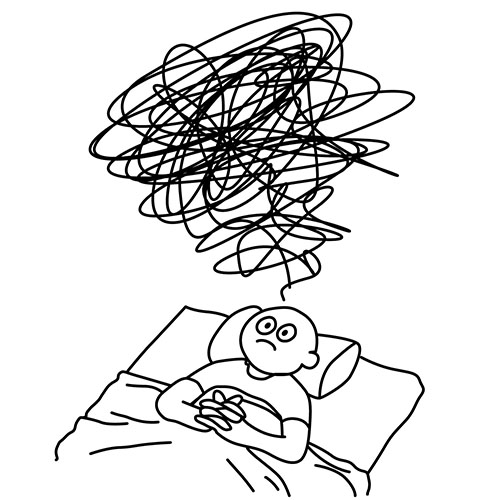
Reflections from Mom: Watching your child struggle with sleep is very difficult. Thinking back, it was such a drastic change from when he was a baby. I knew something was off when he really struggled just to get into bed at night. It’s as if he knew that once he fell asleep, the next part would be waking up to school. As he got older, even just a few years ago in high school, the hours of sleep lost turned into days. He would lie at my feet just in agony as he fought the desperation of sleep and the anxiety of what was to come. It wasn’t easy, but we somehow got through it. As of 6 months ago, Troy was still struggling. So, to hear him talk about how he is on an actual sleep schedule is music to my ears. I honestly wasn’t sure if we would ever get here. I’ve seen many parents in social media groups talk about the challenges they are facing, so I thought I would share our triumphs and trials. You are not alone in this journey. And now….back to Troy.
Sleep should be simple, right? You get tired, you lie down, you close your eyes, and eventually you drift off. For most people, that’s exactly how it works. For me and many neurodivergent people, sleep has been anything but simple. I’m 20 years old now, and I can honestly say I’m finally sleeping well for the first time in 15 years. That’s honestly pretty messed up – I’ve spent three-quarters of my life struggling with something as basic as getting a good night’s rest.
The Early Years: When Anxiety First Knocked
Apparently, I was a great sleeper as a baby. My parents love to tell the story of how they’d take me to movies as an infant, and I’d sleep through the entire film once the previews ended. People would come up to them afterward, amazed that I never made a sound. But that all changed in first grade when my anxiety kicked in. That’s when the real problems started. I was being bullied – not just by kids in my grade, but by older students up to 4 grades ahead of me! There were so many of them, and I felt completely powerless. I didn’t have anyone to stand up for me, and this constant fear kept me on edge all the time. Even at bedtime, I’d lie awake anxious about facing school the next day.
The Vicious Cycle of Exhaustion
By elementary school, I was falling asleep in class regularly. Teachers would get reports that I was sleeping during lessons. The irony wasn’t lost on anyone – I couldn’t sleep at night because of anxiety about school, but then I’d be so exhausted during the day that I’d fall asleep in the very place that was causing my anxiety. Some teachers tried to help. They’d send me on errands with the attendance sheet to the office, or ask if I wanted to do a few laps around the inner workings of the school to wake up. But honestly? The laps never helped. You’re taking me out of the environment that made me tired, making me walk around a few times, then putting me right back in the same environment. You’re basically just helping me get my steps in – you’re not actually solving anything. When we moved to Denver for middle school, things got worse. I went from one bullying environment to another, almost immediately. By the second day of eighth grade, I was being bullied again. The anxiety ramped up, and so did the sleep problems.I remember breaking down in front of my mom multiple times, just completely mentally exhausted from the cycle of anxiety and sleeplessness. None of the teachers or administrators seemed to care enough to do anything about the bullying, which just perpetuated everything.
High School: Medication and Misunderstanding
When I was diagnosed with generalized anxiety disorder in first grade, we started the long process of finding the right medication. It was all trial and error – nobody knew what would help or what might make things worse. Some of the early medications made me drowsy, which meant I was falling asleep in my first few periods of the day. I had some understanding teachers, but I also had some who just didn’t get it. I remember one teacher who would call students names like “turkeys” when they weren’t paying attention. He’d say it was all in good fun, but it’s not good fun when you’re the one being singled out and everyone’s laughing at you – which happened to me constantly because I was always falling asleep. One particularly memorable incident was in sixth-grade science class. My teacher noticed I was super tired and made me stand up, thinking that would solve the problem. I fell asleep standing up! He completely lost his mind and got angry with me. To this day, I have no idea what his intentions were with that strategy. If I want to sleep, I’m going to sleep – that’s just how it is.
The Sleep Study Disaster
At one point, a therapist recommended I get tested for narcolepsy because I could fall asleep anywhere, anytime. Sitting up, in restaurants, at family gatherings – it didn’t matter where we were or how loud it was around me. So we went to Children’s Hospital for an overnight sleep study. They hooked up monitors all over my body – my back, face, legs, chest, arms. Every time I moved (and I move a lot in my sleep), alarms would go off. The nurses would come in, wake me up, reposition all the wires, and then I’d have to try to fall back asleep. The thing is, I have these weird sleep positions. I’ll sit up cross-legged, or sit up with my legs in a figure-four position – one ankle resting on the opposite knee. My mom said that was how I was positioned in the womb, and it’s just my natural way of sleeping. But all those positions kept pulling the wires off. After a night of torture for both me and my mom (who didn’t get any sleep either), the results came back inconclusive. It was a complete waste of time. Next time someone tries to poke me full of wires for a sleep study, I’m biting them. I’d rather go vegan than do that again, and I really don’t like veganism.
College: Rock Bottom
My first semester at CSU was rough. I was finally falling asleep at 6 AM, only to wake up at 8 AM for classes. One day, I woke up at 4 PM and missed all my classes. I had 23 missed calls from my dad. The problem was, I was having the equivalent of what felt like a midlife crisis in my dorm room. I wasn’t a kid anymore, but I didn’t know how to manage my time or take care of myself. I didn’t have my mom to wake me up every morning or my dad telling me what responsibilities to handle. The anxiety and stress from this transition completely messed up my sleep schedule.I felt horrible when I woke up that day – anxious, stressed, and knowing I’d missed important classes. Of course, that was the day there was a pop quiz in one of my classes, which I missed. It cost me about 10 points and probably dropped my grade from an A to a B. The other challenge in college was that the accommodations were completely different. In high school, I had an IEP that was probably a few pages long with all sorts of protections and accommodations. In college, you get a 504 plan through the Americans with Disabilities Act, and my list of accommodations is maybe half a page. One of the accommodations I’d had in high school was that teachers couldn’t give me pop quizzes because of the anxiety they caused. That protection just went out the window in college.
The Turning Point
For 15 years, from age six to about 20, I never really slept well. But something changed recently, and I’ve finally started sleeping on a more adult schedule. Interestingly, it started after our spring break trip to New York. My dad had us waking up at 4 or 6 AM constantly to go do things, and somehow that just rewired my brain. When I got back, I complained to him that I was now waking up at 6 AM because of him, even during summer break. Around the same time, I was doing TMS (Transcranial Magnetic Stimulation) treatment – 36 sessions where I’d sit in a chair for 20 minutes while they basically rewired my brain. I think the combination of these things, plus finally learning better ways to manage my anxiety, has made all the difference.
Learning to Manage What Matters
The biggest change isn’t that my anxiety is gone – it’s that I’ve found better ways to manage it. I’m not sweating the small stuff anymore. Now I have actual adult problems to worry about, like the AC going out when it’s 90 degrees outside. I’ve learned to distinguish between big problems and small problems. Homework used to make me cry (and sometimes still does, in a non-literal sense), but I don’t need to have meltdowns about it anymore. If the Steelers don’t win, okay, that sucks, but it’s not the end of the world. If the Vikings lose, well, that’s just a normal Sunday – that’s my dad’s team, and he still has meltdowns about it! (Troy laughs at himself)I’m getting the recommended seven to eight hours of sleep now, and I’m not waking up in the middle of the night. For the first time in my adult life, I go to bed around midnight and wake up between six and eight. It’s not a perfect schedule, but it’s consistent, and most importantly, it’s restful.
The Bigger Picture
Looking back, I realize how much my sleep problems were tied to feeling unsafe and anxious at school. The bullying, the unsympathetic teachers, the constant feeling of being on edge – all of that made it impossible for my brain to truly rest.I think this is something a lot of families with neurodivergent kids deal with. When your brain is constantly in fight-or-flight mode, when you’re anticipating the next day’s challenges and conflicts, peaceful sleep becomes nearly impossible. The good news is that it can get better. It took 15 years and a combination of the right treatment, medication adjustments, life changes, and learning better coping strategies, but I’m finally sleeping. For any kids or families going through this struggle – hang in there. Sometimes the solution comes from unexpected places (like a spring break trip that resets your internal clock), and sometimes it’s a gradual process of learning to manage anxiety differently. Sleep is supposed to be restorative, not another source of stress. I’m grateful to finally understand what that feels like.
If you or someone you know is being bullied, please reach out to the Bullying Recovery Resource Center – https://bullyingrecoveryresourcecenter.org/. The team there can help you get the resources you need.




0 Comments