Bullying and Your Child's IEP: A Colorado Parent's Guide
If your child has an IEP or a 504 plan, bullying isn't just a school-culture issue — it can be a legal one, too. Kids with learning and developmental differences are bullied at significantly higher rates than their peers, and when it happens, it can interfere with the very services and supports your child is entitled to receive. This guide walks you through what Colorado law and federal special education law say about bullying, the warning signs to watch for, and the concrete steps you can take to protect your child.
Why Kids with IEPs and 504 Plans Are at Greater Risk
Bullying isn't something every child experiences equally. Research on U.S. students has found that children with disabilities are bullied at roughly two to three times the rate of their nondisabled peers, and one widely cited study tracking students over several years found that this gap doesn't close as kids get older — it holds steady from elementary school through high school.
Some groups face even sharper risk. Studies looking at specific disability categories have found high rates of bullying victimization among students with emotional or behavioral disabilities, autism, intellectual disabilities, health impairments, and specific learning disabilities. Kids who struggle with social communication, who look or act "different" in the classroom, or who have a harder time reading social cues or advocating for themselves in the moment are often targeted more — and may have a harder time reporting what's happening.
The stakes are also higher. Bullying that goes unaddressed can chip away at the exact areas an IEP or 504 plan is designed to support — attendance, emotional regulation, academic progress, and access to the classroom itself.
Warning Signs to Watch For
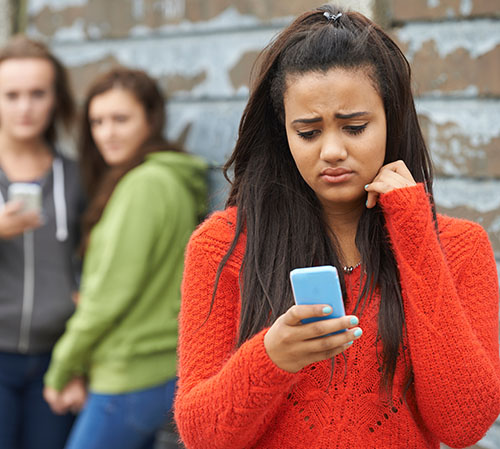
Not every bullied child shows obvious signs, and kids who struggle with communication may show behavior changes well before they're able to tell you directly what's happening. Watch for:
- Unexplained injuries, or torn, damaged, or missing belongings
- Reluctance or refusal to go to school, or a sudden dislike of the bus, lunchroom, or recess
- A drop in grades, or loss of interest in schoolwork
- Changes in eating or sleeping habits
- Sudden loss of friends, or avoidance of social situations
- Feelings of helplessness, or a decrease in self-esteem
- Self-destructive behaviors, or talk of feeling hopeless
- Secrecy around online activity, or sudden changes in device use
If you notice several of these together, it's worth a direct, gentle conversation — even if your child hasn't said anything yet.
Your Child's Legal Protections
Colorado's Anti-Bullying Law
Colorado's Safe Schools Act (C.R.S. § 22-32-109.1) grew out of the response to the Columbine tragedy and requires every school district in the state to adopt a specific bullying prevention and education policy. Under the statute, Colorado defines bullying as:
any written or verbal expression, or physical or electronic act or gesture, or a pattern thereof, that is intended to coerce, intimidate, or cause any physical, mental, or emotional harm to any student.
A few things worth knowing about this law:
- It covers cyberbullying and conduct that happens off campus, when it affects the school environment.
- District policies must clearly separate ordinary "conflict" from bullying, and "harassment" from bullying.
- The law explicitly folds in bullying connected to disability, alongside race, sex, and other protected categories, by cross-referencing Colorado's broader school anti-discrimination statute.
- In 2024, HB24-1285 updated the law to also prohibit bullying based on a student's weight, height, or body size.
- Districts must report bullying incident data to the Colorado Department of Education every year.
Federal Special Education Law: Bullying and FAPE
This is the piece most parents don't know: under the Individuals with Disabilities Education Act (IDEA) and Section 504, bullying isn't just a discipline issue — it can become a denial of your child's right to FAPE (Free Appropriate Public Education).
The U.S. Department of Education's Office for Civil Rights (OCR) and Office of Special Education and Rehabilitative Services (OSERS) have issued guidance making clear that:
- Bullying of a student with a disability — on any basis, not only because of the disability itself — can result in a denial of FAPE that the school is required to fix.
- When bullying happens to a student receiving IDEA or Section 504 services, the school should promptly convene the IEP team or 504 team to determine whether the student's needs have changed and whether additional or different services, aids, or supports are needed.
- Parents have the right to participate in that meeting.
- If the bullying is based on your child's disability, it may separately be investigated as disability-based harassment — a distinct civil rights violation from a FAPE denial, though the two often get investigated together.
In short: you don't have to prove the bullying happened because of your child's disability to have grounds for the school to act. If it's affecting a child who receives IDEA or 504 services, the school's FAPE obligation is already in play.
Steps to Take If Your Child Is Being Bullied
- Listen first — and resist handling it yourself. Give your child room to talk without judgment, and reassure them it isn't their fault. It's a natural instinct to want to call the other child's parents directly, but working through the school (and, if needed, formal channels) tends to get better, more lasting results.
- Document everything, starting now. Dates, times, what happened, who was involved, any witnesses, and every communication with the school. If it isn't written down, it's much harder to act on later.
- Report it to the school in writing. Every Colorado district is required to have a specific bullying policy and reporting process. Ask for a copy of it, and put your report in writing rather than relying on a phone call alone, so there's a clear record.
- Request an IEP or 504 team meeting — in writing. If your child receives special education or 504 services, formally ask the school to convene the team to review whether the bullying is affecting access to FAPE and whether the plan needs to change.
- Use Safe2Tell for urgent or ongoing safety concerns. Colorado's statewide, anonymous tip line routes reports directly to school officials and law enforcement, 24/7 — useful when your child, or a sibling or classmate, isn't ready to report by name.
- Escalate if the school doesn't respond. If the district isn't following its own policy, or your child's FAPE rights aren't being protected, you can file a complaint with the Colorado Department of Education or with the U.S. Department of Education's Office for Civil Rights.
- Bring in support. An education advocate can help you request the right meeting at the right time, put your concerns in writing in a way that gets taken seriously, and make sure the IEP or 504 team actually addresses what's happening — not just documents it.
Where to Get Help in Colorado
Safe2Tell Colorado — Anonymous, statewide safety reporting, available 24/7. Reports go to school officials and law enforcement. Call 1-877-542-7233 · Report online at safe2tell.org · Text S2TCO to 738477
Bullying Recovery Resource Center (BRRC) — A Denver-based nonprofit dedicated to bullying recovery, education, and hands-on advocacy for Colorado families, including support attending school meetings and, where needed, help filing with the Office for Civil Rights. Kids 1st Advocacy is proud to support BRRC's work in our community.
Office for Civil Rights, U.S. Department of Education — Federal complaints related to disability-based harassment or FAPE denial. Call 1-800-421-3481
Colorado Department of Education — Oversees the statewide model bullying prevention policy and district compliance reporting.
National Resources
PACER's National Bullying Prevention Center — Parent guides written specifically for families of kids with disabilities, including resources on the connection between bullying and the IEP process, and a free downloadable Student Action Plan Against Bullying.
StopBullying.gov — The federal government's clearinghouse on bullying laws by state, prevention strategies, and how to respond.
How Kids 1st Advocacy Can Help
As your education advocate, I can help you request the right meeting at the right time, put your concerns in writing in a way that holds the school accountable, and make sure your child's IEP or 504 plan actually reflects what's happening at school — not just what's written on paper.